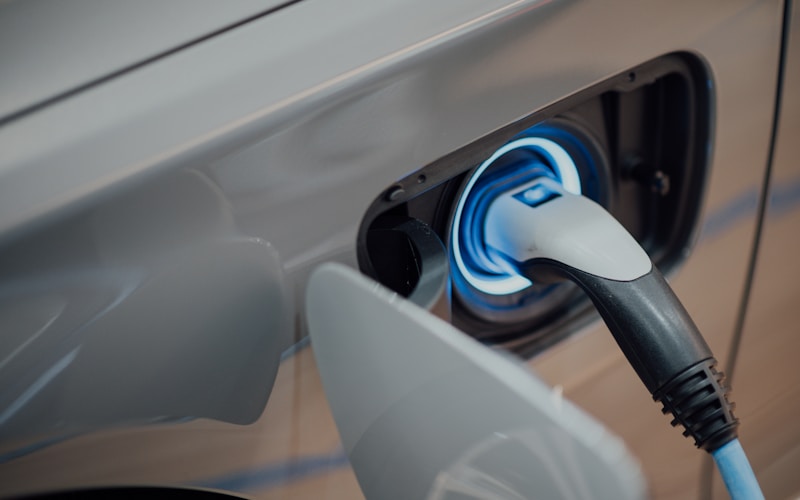
Electric vehicle sales in New York have more than tripled over the past three years, and the Hudson Valley is no exception. With more residents in Orange County and Dutchess County making the switch to electric, home EV charger installation has become one of our most requested services. If you're considering an EV — or just bought one — here's everything you need to know about charging at home.
Level 1 vs. Level 2 Charging: Understanding Your Options
Every EV comes with a Level 1 charger that plugs into a standard 120-volt household outlet. While this works in a pinch, it only adds about 3-5 miles of range per hour of charging. For most drivers, that means an overnight charge barely covers a daily commute. If you drive 40-50 miles per day, you'd need roughly 10-15 hours of charging just to break even — and that's assuming you plug in the moment you get home.
A Level 2 charger operates on a 240-volt circuit — the same type used by your dryer or oven — and delivers 25-30 miles of range per hour. This means a full charge overnight, every night, with power to spare. Even drivers with longer commutes or those who use their EVs for errands and activities throughout the day will wake up to a full battery every morning. For most Hudson Valley families, a Level 2 charger is the only practical choice for daily driving.
Electrical Requirements and Panel Capacity
Installing a Level 2 charger requires a dedicated 240-volt, 40-50 amp circuit from your electrical panel to the charging location. This is where a licensed electrician becomes essential. We need to evaluate whether your existing panel has the capacity for the additional circuit, which draws significant power — roughly equivalent to adding another electric dryer to your home.
Many homes with 100-amp panels will need a panel upgrade before an EV charger can be safely installed. Even some 200-amp panels may need load management if they're already near capacity with existing circuits for HVAC, electric water heaters, and other high-draw appliances. We perform a thorough load calculation to determine exactly what your panel can handle.
The charger itself can be hardwired directly to the circuit or connected via a NEMA 14-50 outlet. We generally recommend hardwired installations for permanent setups, as they're more secure, often required by local building codes, and provide a cleaner installation. However, a NEMA 14-50 outlet offers flexibility if you want to be able to unplug and take your charger with you — useful if you're renting or plan to move.
Permits, Inspections, and Code Compliance
In both Orange County and Dutchess County, EV charger installations require an electrical permit and inspection. This isn't optional — it's a legal requirement that protects you and ensures the installation is safe. As your licensed electrician, we handle the entire permitting process — from application to final inspection sign-off. We know the local building departments, understand their requirements, and ensure your installation passes inspection the first time.
Code compliance also matters for your homeowner's insurance. An unpermitted electrical installation could void your coverage in the event of a fire or other electrical incident. The small cost and time investment in proper permitting is well worth the protection it provides.
New York State Incentives and Federal Tax Credits
New York offers several incentives that can significantly reduce your installation costs, making home EV charging more affordable than many people realize:
The state's Charge Ready NY program provides rebates of up to $4,000 for Level 2 charger installations at residential properties. This rebate applies to both the charger equipment and the installation labor, and it's available on a first-come, first-served basis.
The federal Inflation Reduction Act includes a tax credit of up to 30% of the total installation cost (capped at $1,000 for residential installations) for qualified EV charging equipment. This credit applies to both the charger and the electrical work required to install it.
Additionally, some utility companies in the Hudson Valley offer time-of-use rates that make overnight charging significantly cheaper than daytime electricity. By charging during off-peak hours (typically 11 PM to 7 AM), you can reduce your per-mile fuel cost to the equivalent of paying less than $1.00 per gallon of gasoline.
We stay current on all available incentives and can help you understand which programs you qualify for and how to maximize your savings.
Choosing the Right Location and Charger
The ideal charger location is as close to your electrical panel as possible to minimize wiring runs and cost. Every additional foot of wire between your panel and charger adds to the installation cost, so proximity matters. Most homeowners install their charger in the garage, but outdoor-rated units can be mounted on exterior walls, carports, or posts if needed.
When selecting a charger, we recommend units from established manufacturers like ChargePoint, JuiceBox, or Grizzl-E that offer smart features including Wi-Fi connectivity, scheduling capabilities, and energy monitoring. Smart chargers let you schedule charging during off-peak hours automatically and track your energy usage over time.
What to Expect During Installation
A typical residential EV charger installation takes 4-6 hours. We'll run the dedicated circuit from your panel, install any necessary conduit, mount the charger unit, make all electrical connections, test everything thoroughly, and walk you through the operation and any smart features. If a panel upgrade is needed, that adds approximately one additional day to the project.
After installation, we'll ensure you're comfortable with the charger's operation, help you set up any smartphone apps, and configure charging schedules if your charger supports them. We also provide documentation of the installation for your records, insurance, and any incentive applications.
Ready to charge at home? Contact T8 Electrical for a free site assessment and quote. We'll evaluate your panel, recommend the best charger for your needs, and provide a detailed estimate that accounts for all available incentives.
Need help with your electrical project?
T8 Electrical serves Orange County and Dutchess County, NY. Call us for a free estimate.


